
CSE department is pleased to announce that Dr. Khaled Shaban and Dr. Osama Halabi have received awards under the Institutional Collaboration Grant (Qatar University–Khalifa University) 2026 cycle. The awards recognize impactful collaborative research that addresses critical challenges in energy systems and sustainability.
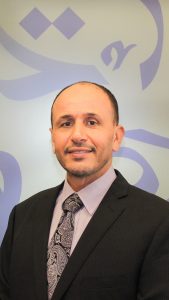
The first awarded project, led by Prof. Khaled Shaban, is titled “Optimal Energy Management Framework for Inverter-based Interconnected Microgrids with 100% Renewable Penetration.” The project responds to the growing global shift toward renewable energy integration and the rapid expansion of electric vehicles and charging infrastructure—developments that are reshaping how modern power systems are designed and operated.
The research aims to develop a scalable and intelligent energy management framework for inverter-based, interconnected microgrids operating with full renewable penetration. The proposed solution will optimize the allocation of grid-forming and grid-following inverter-based resources across multiple microgrids, while coordinating localized control strategies at the system level to ensure reliable, efficient, and resilient operation.
Project Team
Qatar University (QU)
Principal Investigator: Khaled Shaban, Computer Science and Engineering
Co-Investigators: Ahmed Massoud, Electrical Engineering, Nuri Onat, Qatar Transportation and Traffic Safety Center
Khalifa University (KU)
Principal Investigator: Tarek Hussein Elfouly, Electrical Engineering
Co-Investigator: Surour Mohamed Alaraifi, Electrical Engineering
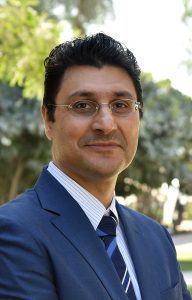
The other project is led by Dr. Osama Halabi and supports a cutting-edge robotics initiative titled “Visual-Haptics for Remote Robot Operation, Inspection & Physical Intervention.” This two-year collaborative project between Khalifa University and Qatar University aims to advance remote robotic operation in challenging environments such as underwater infrastructure and greenhouse agriculture. The research focuses on transitioning a visual-haptic teleoperation framework from laboratory prototype to real-world validation (TRL 4–6).
The project integrates multimodal visual and haptic feedback, predictive safety control, and immersive XR interfaces to enable safe, intuitive, and resilient human-in-the-loop robot operation. By addressing the limitations of visual-only teleoperation and unreliable autonomy, the work paves the way for more robust robotic inspection and physical intervention systems.
Project Team
Qatar University (QU)
Lead Principal Investigator: Osama Halabi
Principal Investigators: Mohammad Abdulaziz Al-Sada, Faisal Ibrahim J J Al-Jaber
Khalifa University (KU)
Lead Principal Investigator: Jorge Manuel Miranda Dias
Principal Investigators: Hamad Karki, Jaime Viegas
This project brings together an interdisciplinary team with expertise in robotics, artificial intelligence, haptics, extended reality (XR), and human–robot interaction, representing a significant advancement in cross-domain teleoperation research within the region.
This award highlights the strength of cross-institutional collaboration between Qatar University and Khalifa University and underscores their shared commitment to advancing sustainable energy technologies and intelligent power system solutions.